By Ellen Hambuba
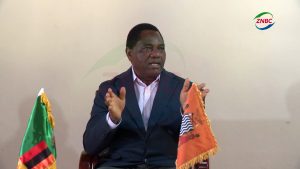
President Hakainde Hichilema has called for urgent reforms to the global debt restructuring system, saying Zambia’s prolonged negotiations exposed weaknesses that must be corrected to protect developing economies.
Speaking during bilateral talks with United Nations Conference on Trade and Development (UNCTAD) Secretary-General Rebeca Grynspan at State House, President Hichilema said Zambia lost nearly three years navigating complex restructuring processes under the G20 Common Framework — time that could have been used to drive economic growth.
He noted that while Zambia appreciates the support from UNCTAD and cooperating partners, the slow pace of negotiations placed heavy pressure on fiscal space, investment flows, and social spending.
The President emphasized that debt restructuring must become faster, more predictable, and more transparent. He added that Zambia’s experience positions it to help shape a more responsive global debt architecture, particularly for vulnerable economies facing external shocks.
President Hichilema expressed Zambia’s interest in hosting the Secretariat of the Borrowers’ Forum, a platform aimed at strengthening coordination and information sharing among debtor nations. He said the Forum is critical in ensuring countries negotiate from a position of shared knowledge and collective strength.
He further stressed that macroeconomic stability achieved through Zambia’s IMF-supported programme must now translate into growth, production, and value addition rather than prolonged crisis management.
Meanwhile, Ms. Grynspan commended President Hichilema for ensuring Zambia’s strong economic rebound, describing the country as a rising regional hub anchored on reform and strategic positioning. She noted that Zambia’s economic growth of nearly six percent last year places it above many countries in the Global South, reflecting the impact of fiscal discipline, structural reforms, and diversification efforts.
Ms. Grynspan said UNCTAD’s support to Zambia is now focused on practical, demand-driven interventions, including a study on critical energy transition minerals aimed at supporting value addition and sustainable industrialisation. She added that Zambia’s experience in debt restructuring is now serving as a model for other developing nations.